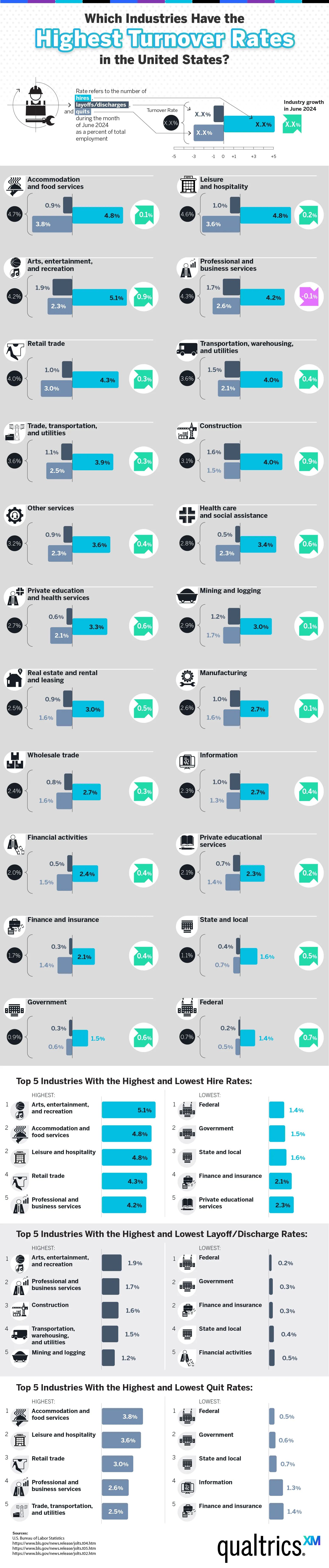
Recent studies have cast a spotlight on employee turnover rates across various U.S. industries, revealing some surprising trends and costly consequences for both workers and business owners. According to research from Qualtrics, the Arts and Entertainment sector tops the list with a turnover rate of 5.1%, a figure considerably higher than the federal government’s 1.4%. Accommodation and food services, leisure and hospitality, professional and business services, retail, and transportation also report turnover rates above the national average, raising concerns about workforce stability in these fields.
Behind the numbers is a complex interplay of factors driving employees out of their jobs. Inadequate compensation, lack of workplace flexibility, and minimal opportunities for career advancement are cited as major reasons for quitting. Many of these high-turnover industries demand physical labor, which often leads to burnout or health-related issues. Restaurant owners, for instance, face an average turnover rate of 4.7%. For a staff of 50, that’s two employees leaving every month, resulting in an annual replacement cost of approximately $150,000. This expense can cripple a small business.
Gig work, prevalent in the arts and entertainment sector, adds another layer to the problem. While offering flexibility, gig work can also lead to wage instability and workflow disruptions, sometimes culminating in strikes or other labor actions. Low morale and rigid schedules further exacerbate the issue, making retention a persistent challenge. In contrast, industries such as government, finance, and education demonstrate much lower turnover rates, thanks to stable job structures and strong benefits, like health insurance.
The implications of high turnover extend beyond immediate financial costs. Companies must allocate more resources to recruiting, hiring, and training, diverting energy away from growth and innovation. Experts suggest that listening to employee feedback and prioritizing satisfaction could help businesses in high-turnover sectors save money and improve morale in the long run. Ultimately, the data underscores the importance of stability and support in retaining talent across America’s diverse workforce.