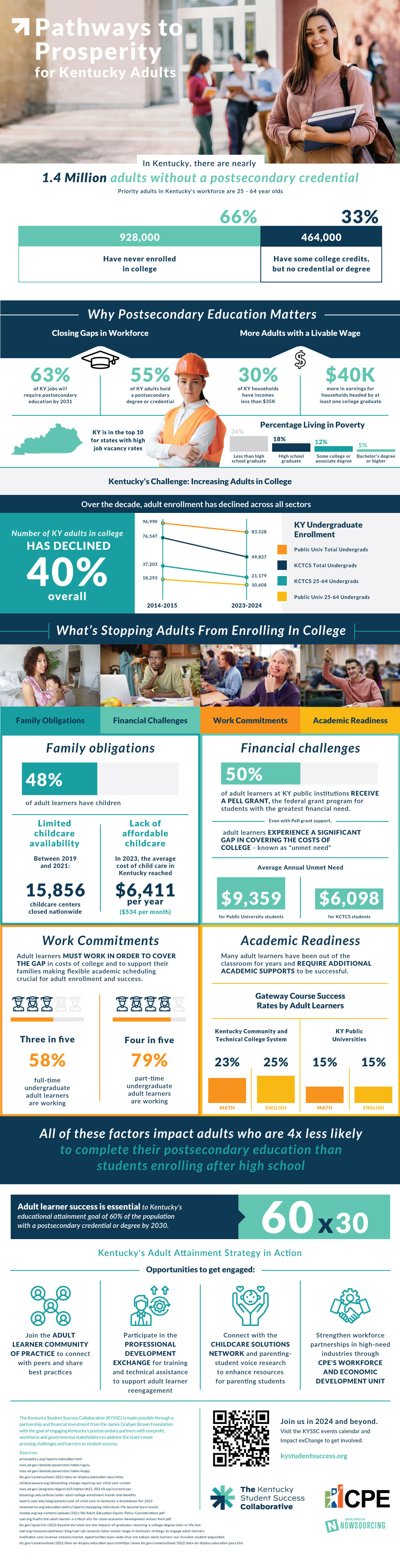
College degrees are a prerequisite for many jobs in the modern market, as it signals to employers that a candidate has the proper skills, training, and knowledge to succeed in their role. Therefore, there is a positive correlation between compensation and level of education. Households with at least one college graduate are likely to earn $40k more than households with no postsecondary education. On the flip side, adults without any higher education are more likely to struggle below the poverty line. For example, 52% of people with a high school degree or less are below the poverty line compared to 5% with a Bachelor’s degree or higher.
Therefore, it is a massive problem in Kentucky that there are 1.4 million adults without a postsecondary credential from a college or university. Of this population, two-thirds have never been enrolled in college ever, while one-third have some credits but have not completed their degree. There is a risk of gaps opening in Kentucky’s workforce if there are too many jobs that require a degree without enough applicants that meet this education requirement. Currently, the state is in the top ten states with high job vacancy rates. The state is dedicated to reversing this trend through their initiative to ensure 60% of their adult population has a postsecondary credential by 2030.
There are a few reasons why adults hesitate to enroll in college that must be addressed if Kentucky is to raise their higher education rates. They often have family obligations and conflicting work schedules that prevent them from attending regularly scheduled classes. Adult learners with children need access to affordable childcare, which is currently limited in Kentucky. 80% of part-time undergraduate adult learners have a part time job, meaning they need to attend flexible classes that either occur at night or have a remote attendance option.