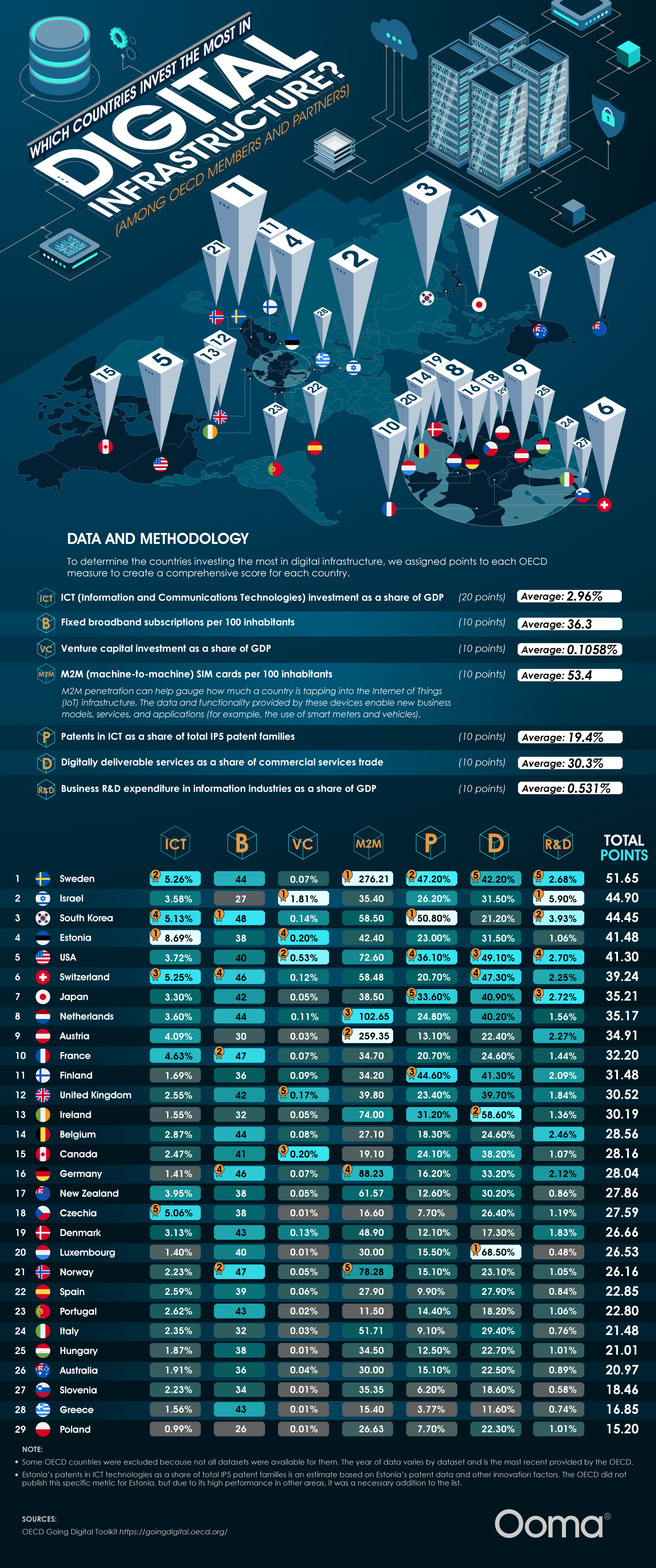
For a century, physical infrastructure took precedence around the world, with highways, dams, and bridges serving as monuments to national ambitions. Digital infrastructure may not be as awe-inspiring (it’s largely invisible, after all), but these new rankings from Ooma measuring digital infrastructure achievements make the case that these invisible pieces might matter most.
Consider Estonia, a country of 1.3 million people that turned into a global touchstone for digital infrastructure success. Its citizens carry digital IDs that can be used to access healthcare, public assistance, transit, and even voting. You can do any of these things wherever you have an internet connection, which you’ll have no trouble accessing anywhere in the country. Estonia tops the chart on ICT investments, and it shows.
A striking observation across the leaderboard is that there is no single formula for success. Sweden tops the list through breadth and consistency, fueling a balanced diet of investments, research, and accessibility. Israel takes second place through the concentrated risk of funneling venture capital into innovation investments. South Korea leads the world in the fastest networks.
Countries that invested in digital infrastructure early are compounding their returns with higher GDP growth, more digitally skilled workers, and more productive firms. Those who hesitated to invest face a widening gap that’s harder to catch up with each year. The digital divide spans borders, not neighborhoods. The lesson here is that digital infrastructure may be invisible, but it isn’t optional. The systems we can’t see are the ones deciding who is participating in the modern economy and who’s left on the sidelines.